"Celestial Navigation in the Age of Sail" was exactly what I was looking for to familiarize myself with historical marine navigation. Frank is an engaging instructor who weaved the story of a 19th century whaling voyage into hands-on practical calculations. He started by unveiling an incomprehensible historical document filled with numbers and promised that by the end of the course we could decode the figures. He's developed a step-by-step teaching method that is a marvel to watch and experience.
I must admit I dreaded two, back-to-back, 5-hour days, but the time sailed by. (Sorry can't resist.) Thank you.
He also included some 17th century data that I needed. I'm neither a mathematician nor a sailer, but a journalist and author.

The analemma is the Sun’s path in the sky over the course of one year when photographed each day at a constant time of day. This week, in mid-February, we are at a special place in this path... when the Sun is running slow.
Photograph the Sun with a fixed camera on a tripod once a week at exactly 12:00 Eastern US time, weather permitting, and over the course of a year the Sun will trace out a figure-eight shape in the sky known as the analemma. During the year, the Sun will be found low in the sky in late December at the winter solstice and high in the sky in late June at the summer solstice. That’s the top and bottom of this figure-eight.
There’s a secondary motion, left and right, which is less well-known. This secondary motion creates the upper and lower loops in the analemma curve. This motion happens because the Sun is not a good clock. The Sun itself runs fast and slow in our skies. The time from one noon to the next can vary by as much as thirty seconds. That is, if we time how long it takes for the Sun to travel from exactly due South (that’s local noon) on a Tuesday and then comes back to due South on a Wednesday, for example, that may take 24 hours and 30 seconds in early December, longer than a clock-based day by 30 seconds. At other times during the year it may take 23 hours 59 minutes and 30 seconds, or shorter than a clock day by 30 seconds.
The Sun runs fast and slow, and that adds up during the winter months until we hit Sun Slow Day. Every year on February 11, the Sun is behind schedule by about 14 minutes. It’s as if the Sun is sleeping in... It’s late for sunrise. It’s late for local noon. And it’s late for sunset, too. Late by fourteen minutes.
How does the Sun fall behind schedule? There are two factors here, but a key component is the Earth’s orbit around the Sun. During that part of the year when the Earth is a little closer to the Sun (which luckily for us in the northern hemisphere is in January), the Earth in its orbit is gliding past the Sun a little faster than average, and so the Sun as we see it in the sky falls behind. Later in the year it catches up again and even over-shoots until it’s over 15 minutes ahead of schedule in early November.
We only see this phenomenon because we keep time by machines, mechanical clocks which count off the seconds at a constant rate. If we still kept time by sundials, of course, we would never notice. The difference in time, the discrepancy between “sundial time” and “clock time” is known by an archaic and rather poetic name: the equation of time. It’s not an equation in the sense of modern math. The “equation” is simply a correction, a tabulation for each day of the year telling us how early or late the Sun is. It’s a predictable, repeating number for any day of the year, year after year.
In the image here illustrating the Sun’s analemma in the sky over Mystic Seaport, this week the Sun is on the lower left side of the curve, as far to the left as it can go. It’s behind schedule as much as it can be during the year, and so when the camera captures its exposure at exactly 12:00 Eastern time (EST), the Sun hasn’t reached due South and won’t do so for almost 15 minutes. That’s the equation of time for mid-February. Come back again during the year, and as the equation of time varies, the Sun reaches due South sometimes before 12:00 and sometime after the exact hour of 12 on a clock.
Celestial navigators sailing by the Sun and stars have needed the equation of time to find their positions at sea ever since scientific navigation became possible over 250 years ago. Each day aboard the Charles W. Morgan, visible at the center of this image, the navigators would look up the value of the equation of time in their nautical almanacs and apply that to their observations of the Sun in the sky. In the Age of Sail, their tables directly and explicitly included the exact value of the equation of time, and it was essential to determining a vessel’s longitude. We cover this in detail in my workshop Celestial Navigation in the Age of Sail.
In modern celestial navigation, as in the workshops that I teach online (this year's schedule), the equation of time is still present but it’s hiding in stealth mode in a quantity called the GHA of the Sun. Navigators read out the Sun’s GHA to determine their longitude with different methods today but the same underlying principle as those navigators in the Age of Sail.
And it’s not just navigators at sea! Even in our backyard gardens, there’s occasionally good reason to know the equation of time, and this week in eastern New England, from New Haven to the end of Cape Cod, this happens to be a convenient time to apply the equation of time to a garden sundial. Many of us have sundials in our gardens, and they’re almost entirely ornamental. They’re amusements, and we don’t worry about them much for time. Yet it’s nice to set one up properly, as it would have been aligned in an earlier era. The month of February is the perfect time to align your sundial.


The gnomon or shadow-casting element of a common sundial should be aligned to point to true North. There are ways of making this alignment based on digital maps and GPS tools, too. We can also align to North using the North Star. But this week, there’s a nice coincidence that happens in eastern New England. This week our time zone offset happens to be almost exactly the same as the equation of time (the Sun’s delay to local noon). Both are about 14 minutes and working in opposite directions. And that means that a properly aligned sundial will read the same as a common clock set to Eastern time this week.
If your sundial has a reasonably legible scale of hours, this also implies that you can align the sundial properly at any other time of day this week. Just rotate it until the sundial time matches the clock time. Then your sundial is nicely aligned to true North. Note that this alignment does not mean that it will read clock time in other months of the year. A sundial always read true Sun time, known in the jargon of astronomy and celestial navigation as Local Apparent Time. But if you align your sundial properly this week when clock time matches sundial time, your sundial will read accurate Sun time all year long.
Frank Reed
Clockwork Mapping / ReedNavigation.com
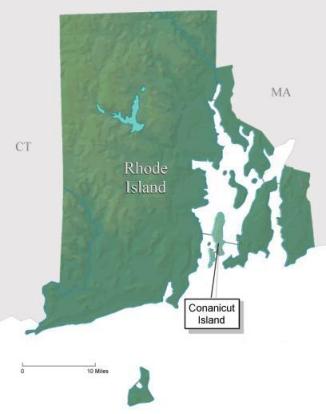
Conanicut Island USA
Some resources:
[1] Visit analemma.com, a simple, single-purpose website that has explained the equation of time and the analemma nicely since the late 1990s.
[2] Wikipedia’s article on the analemma is useful, too, though it could use some editing.
Comments:
Lucinda Fleeson wrote: 26👍
Philip M. Sadler wrote: 86👍
What a joyful and stimulating experience to enroll in Frank Reed's class, Celestial Navigation: 19th Century Methods. Frank is a skillful and engaging teacher, able to draw students into this fascinating subject, whether they be novice or experienced. His depth of knowledge is tremendous. Participants get a real taste of what it was like to be aboard a sailing ship of the day. I learned much to enliven my own teaching and decode 19th century ship's logs. It is a rare experience, indeed, to have so much thoughtfulness, enthusiasm, and fun packed into two days. This is the way to learn!
Philip M. Sadler, Ed.D.
F.W. Wright Senior Lecturer in Celestial Navigation
Harvard University Astronomy Department
Cambridge, MA
Philip M. Sadler, Ed.D.
F.W. Wright Senior Lecturer in Celestial Navigation
Harvard University Astronomy Department
Cambridge, MA
Homer Smith wrote: 10👍
Over the past few years I have taken all of the Celestial Navigation courses taught by Frank Reed at ReedNavigation.com and I recently repeated Modern CN 1 & 2 just for the pure enjoyment that it brought to me.
My interest in CN started a few years ago as I puzzled over how the stars could be used to find one’s position on the earth. I tried to learn CN through self-study, but I couldn’t make the subject matter interesting and realized that this was not the correct approach. You need a skilled instructor that can guide you through the learning process, and that’s what Frank Reed provides.
In a relatively short period of time I had a solid grounding in CN. Frank has unmatched knowledge of CN. His classes are fun, interesting, and sprinkled with historical context and include as much or as little math as you desire. His visual aids were very helpful and the time spent on discussing how to properly use a sextant to take a sight was beneficial. You will learn how to find stars in the night sky by which to navigate. The downloaded course guide is very concise and includes tables that are valid for 5 years into the future.
You don’t need to be at sea to do CN. I live inland and learned in the class how to do land-based navigation with a sextant, either with a large or small body of water to provide a true horizon, or with no water horizon at all.
Going back 250 years, I understand how CN was practiced through the ages, up to the present time with calculator, equations and tables. Thanks to Frank, I take great satisfaction in knowing that I possess a skill that very few people have. I highly recommend his courses.
Homer R. Smith M.D.
My interest in CN started a few years ago as I puzzled over how the stars could be used to find one’s position on the earth. I tried to learn CN through self-study, but I couldn’t make the subject matter interesting and realized that this was not the correct approach. You need a skilled instructor that can guide you through the learning process, and that’s what Frank Reed provides.
In a relatively short period of time I had a solid grounding in CN. Frank has unmatched knowledge of CN. His classes are fun, interesting, and sprinkled with historical context and include as much or as little math as you desire. His visual aids were very helpful and the time spent on discussing how to properly use a sextant to take a sight was beneficial. You will learn how to find stars in the night sky by which to navigate. The downloaded course guide is very concise and includes tables that are valid for 5 years into the future.
You don’t need to be at sea to do CN. I live inland and learned in the class how to do land-based navigation with a sextant, either with a large or small body of water to provide a true horizon, or with no water horizon at all.
Going back 250 years, I understand how CN was practiced through the ages, up to the present time with calculator, equations and tables. Thanks to Frank, I take great satisfaction in knowing that I possess a skill that very few people have. I highly recommend his courses.
Homer R. Smith M.D.