I just took one of Franks classes and it was awesome!!
Frank taught an incredible class on celestial navigation that brought me from novice to some solid understanding of sextants, their history and most importantly their use as a aid to seeing the sea...and knowing where you are on this planet!
Hands on, wealth of knowledge, great resources ... he really covered a lot of ground! There was a lot of math but unlike in my youth, I was on the edge of my seat to soak up knowledge!! Frank made it relatable and real. The sextant which is such an iconic tool of the sea, was demystified. By the end of class i felt comfortable with it. I had mastered how it worked, how to read it and how to adjust it to insure its accuracy.
I came away with all of the cheat sheets and understandings of equations and concepts that breathe the life into what you capture through your sextant sightings.
I would highly recommend Frank and believe Mystic Seaport with its planetarium, an ideal setting for my class with him discovering this timeless tool of the sea.
Frank did a great job keeping the class interesting with visual aids, both on screen and out on the Seaport grounds.
All in all i would highly recommend this class to any and all folks interested in learning about navigation and sextants. Informative and digestible, but most of all useful to the point where i am comfortable with the instrument and have the formulas needed to continuing to set my sights on the horizon!!
I look forward to more classes to learn more from Frank and strengthen my understandings of celestial navigation!
Thank you!!!
John
Advanced Lunars
Winter / Spring 2026:
Diving deeper with Lunars, we'll learn more history, more fascinating math details, and we'll also see how lunars survived into the Space Age.
More details soon...
All workshops: $ 149 per person, per workshop- Register May 18,19,20: online.
Created and taught by Frank Reed, celestial navigation and astronomy consultant on the team that found Shackleton's "Endurance" in 2022. Also a recent guest expert in celestial navigation on Neil deGrasse Tyson's StarTalk on The National Geographic Channel.
- Nine hours of class sessions.
- Lunars and Longitude is highly recommended as a prerequisite.
- Good familiarity with trigonometry and some algebra is recommended.
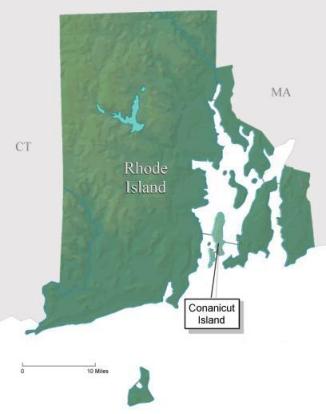
If you're registered for an online workshop, you're invited to attend hour-long sextant practical sessions in Rhode Island and Connecticut scheduled as weather and other factors permit. These live, in-person sessions are included in your registration for online classes.
Comments:
John Workman wrote: 20👍
Greg Rudzinski wrote: 6👍
The online class "Lunars: Finding Longitude by Lunar Distance" was a very interesting introduction to the esoteric history of lunars as practiced at sea in the pre chronometer 18th century tall ship era. Practical instruction was also done demonstrating the physical process of observing a lunar with a sextant followed by a how to lunar sight reduction example using a pocket calculator, formulae, and tables. A very rewarding experience.
Greg Rudzinski
Retired Merchant Mariner
SUNY Maritime class of 80
Greg Rudzinski
Retired Merchant Mariner
SUNY Maritime class of 80
Dr. Russell D. Sampson wrote: 31👍
I took Frank's 19th Century Celestial Navigation class in April 2013 and really enjoyed it. Not only was the class interesting but my fellow classmates were too; a retired skipper of a ballistic missile sub, the son of the fellow who invented GPS, a teacher, a captain of a Panamax container ship and a fellow who crossed the Atlantic solo - twice!
The class was also a great resource for my teaching and my own research interests such as the visibility of celestial objects in the daytime (Jupiter and Venus) and the effects of astronomical refraction near the horizon. I hope to take more workshops with Frank.
Dr. Russell D. Sampson
Wickware Planetarium
Eastern Connecticut State University
The class was also a great resource for my teaching and my own research interests such as the visibility of celestial objects in the daytime (Jupiter and Venus) and the effects of astronomical refraction near the horizon. I hope to take more workshops with Frank.
Dr. Russell D. Sampson
Wickware Planetarium
Eastern Connecticut State University